Early Music
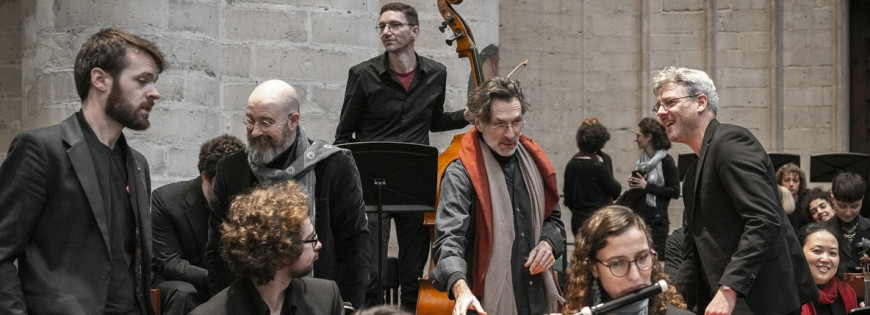
Located in the historic heart of the European capital, the Department of Early Music at the Conservatoire royal de Bruxelles boasts nearly two centuries of history and excellence. For over twenty years, it has established itself as one of Europe’s leading centres for the study of historically informed performance.
Led by an international team of leading artists—soloists, instrumentalists and educators who are actively involved in the world’s foremost specialist ensembles—the Department combines high artistic standards with ongoing pedagogical reflection. This approach is part of a constant commitment to adapting teaching to the realities of an ever-changing musical landscape.
Following the celebrations marking its twentieth anniversary in 2023–2024, a wide-ranging review of teaching practices was carried out to identify students’ current needs in light of the demands of the professional world. This process led to a coherent and structured update of the curriculum, centred around clearly defined objectives.
The start of the 2026 academic year will mark the implementation of these new directions. The structure of the courses has been redesigned to offer, from the Bachelor’s level onwards, a comprehensive programme in early music that closely integrates practical and theoretical elements. Concentrating theoretical teaching at Bachelor’s level will, at Master’s level, create scope for in-depth specialisation, fostering the development of a distinct artistic profile.
Recognising that early music is no longer confined solely to the Baroque repertoire, the Department is now broadening its scope of research to include the Classical and Romantic periods for all instruments. This expansion is underpinned by the methodology specific to historically informed performance: organological analysis, consultation of written sources and audio recordings, and critical examination of documented performance practices. The aim, for each period, is to recreate performance conditions that are as faithful as possible to their historical, aesthetic and cultural context.
The Department of Early Music thus reaffirms its commitment to renewal and its ambition: to welcome students keen to explore historically informed performance, from the late Renaissance through to and including the Romantic period, within a framework where research informs performance and where academic rigour underpins artistic commitment. True to its motto, it reaffirms its founding principle: research in the service of practice.
Benoit Douchy
Chair of the Early Music Department
benoit.douchy@conservatoire.be
LIFE IN THE DEPARTEMENT
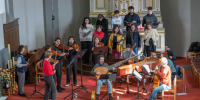
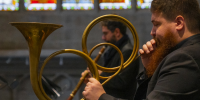
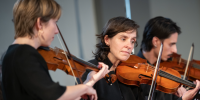
To support this modernised approach to teaching, the Department provides students with a rich ecosystem of tools and resources, fully centralised and showcased via an internal website that organises all activities. At the heart of this training programme, chamber music and orchestral performance stand out as key components: these ensemble practices offer the opportunity to apply, in a practical and collaborative way, the knowledge acquired during individual and group lessons. To support this learning, students enjoy privileged access to an exceptional collection of instruments — comprising a vast selection of string, wind and keyboard instruments — as well as to the renowned library of the Conservatoire royal de Bruxelles, a veritable historical treasure trove housing precious manuscripts.
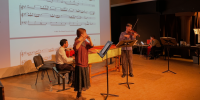
The academic year is also punctuated by key events that foster exchange and openness, such as the research and practice symposium, which brings together the entire student body and teaching staff. This flagship event regularly features an instrument fair, facilitating special encounters with makers of historical instruments from across Europe, and is often followed by an immersive study trip to the heart of a major European musical city. It is precisely this combination of academic rigour, unique heritage and international dynamism that defines our identity: you won’t come to the Brussels Conservatoire by chance!
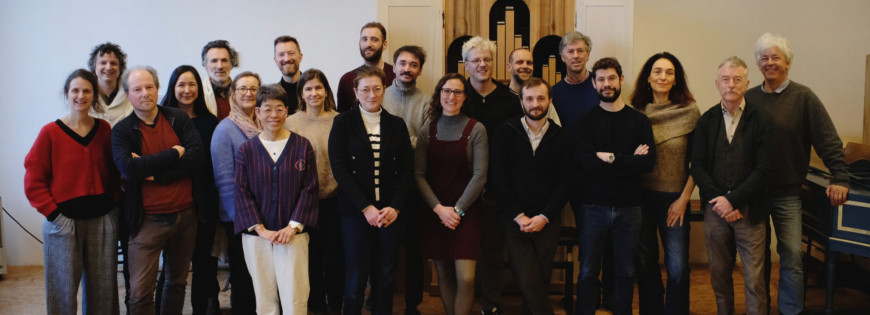
FACULTY
Benoit Douchy
Chair of the Early Music Department
benoit.douchy@conservatoire.be