Valentin Bajou
Biography
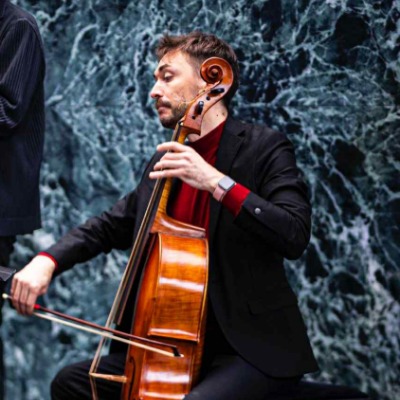
Valentin Bajou plays bass violins – notably the cello – following an approach centred on early music practices and their informed performance. Rather than seeking to modernise or make these traditions appealing, he prefers a patient and rigorous approach, based on period sources and practices. It is not the effect that interests him, but the research that precedes it.
He sees his work as a form of restitution: not that of a fixed repertoire, but of ways of doing and conceiving the roles of the musician. It is about making a vanished world of sound heard, without smoothing it over or masking its otherness. For him, this music is not universal. It belongs to other cultures, other sensibilities. Bringing it back to life today means first reading it, understanding it, before attempting to make it heard.
Trained in a multidisciplinary approach, he conceives musical expression as the culmination of research rather than inspiration. His approach is similar to that of an archaeologist or restorer: rigorous, slow, attentive to detail. Beauty is never an end in itself, but a possible effect of honest work, free from any aesthetic compromise.
His work in the historical cello class at the Conservatoire royal de Bruxelles – where he now teaches basso continuo on violoncellos – embodies this desire to lay new foundations for the profession of historical musician, far removed from established practices and market expectations.
His career was marked early on by a decisive encounter with a professor of conducting, who instilled in him a taste for doubt, rigour, and uncompromising intellectual rigour. Valentin Bajou enthusiastically shares this approach in his classes, where historical rigour is always combined with a lively, open practice based on exchange.
He studied on both sides of the Atlantic before joining the teaching staff of the early music department at the Conservatoire royal de Bruxelles. He is currently pursuing a PhD at the Free University of Brussels, focusing on continuo performance practices on the viol bass in Italy in the 17th and 18th centuries.