Marianne Pousseur
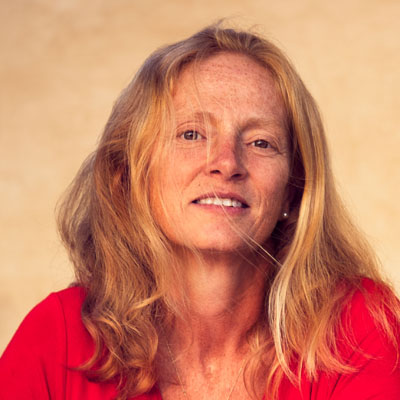
Biography
While studying classical singing and chamber music at the Conservatoire de Liège, Marianne Pousseur sang in both ensembles directed by Philippe Herreweghe, the Collegium Vocale and La Chapelle Royale. At the same time, she participated in several productions of the Théâtre du Ciel Noir, directed by Isabelle Pousseur. Their stage version of Arnold Schönberg’s Pierrot Lunaire was filmed, with the Ensemble Musique Oblique under the musical direction of Philippe Herreweghe, and recorded on CD for the label Harmonia Mundi France. She has regularly performed with ensembles such as the Schönberg Ensemble of The Hague, conducted by Reinbert de Leeuw, Remix in Porto, Die Reihe in Vienna, as well as with the Ensemble Intercontemporain, notably under the direction of Pierre Boulez, in a repertoire focused primarily on the twentieth century, contemporary works, and musical theatre. She was invited by the Festival d’Automne in Paris to perform Salvatore Sciarrino’s Infinito Nero, which she also performed in Lohengrin with the Ensemble Intercontemporain, with ASKO (Amsterdam), and with Ensemble Risognanze (Milan). With this latter ensemble, she recorded the work for the label Col legno, released in 2008, which won the MIDEM Classical Awards in 2009 in Cannes.
Her theatrical experience has enabled her to perform as a reciting singer in major symphonic works such as César Franck’s Psyché and Grieg’s Peer Gynt in a concert version under the direction of Kurt Masur with the Orchestre National de France and the London Philharmonic Orchestra. In collaboration with Enrico Bagnoli, she founded the musical theatre company Khroma. With this company, she has created numerous productions in various formats, ranging from children’s shows to highly specialized musical works, presented worldwide in major international festivals. Georges Aperghis composed Dark Side for her in 2004 with the Ensemble Intercontemporain. They worked together again in 2008 for Ismène, a poem by Yannis Ritsos transformed into an opera for solo voice. In 2013, she created Phèdre, by the same author, in which she performed as singer, actor, and composer. In 2015, she created Ajax, the final part of the “Trilogy of Elements” by the same author, also as singer, actor, and composer. The trilogy was performed in its entirety in Belgium and Europe in 2017 and 2018. After many years as a singing teacher, she is currently a professor of lyrical art at the Conservatoire Royal de Bruxelles, Belgium.
Overview of the Lyrical Art Course
The lyrical art course includes the study of the operatic repertoire and the theatrical techniques required for its interpretation: text analysis and contextualization, character study, movement, stage balance, and interaction with partners. It also serves as an important point of convergence during conservatory studies, allowing singers to work collectively, fostering creativity and group dynamics, and applying this energy to projects, sometimes internal to the school, sometimes external, but always multidisciplinary. Internally, this includes exchanges with different sections: Early Music, Jazz, Dramatic Arts, and more. Externally, it develops collaborations with professional institutions such as the Opéra Royal de Wallonie and the Maison des cultures de Molenbeek, which host, support, and present projects. Examples include a full production of L’enfant et les sortilèges in 2014 and the Belgian premiere of an opera by John Adams in 2018 and 2019.