Nicolas Pirson
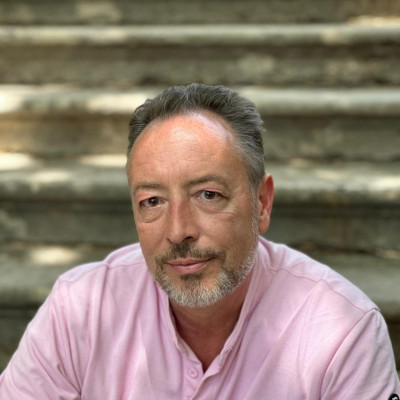
Biography
Trained at the Conservatoire Royal de Bruxelles in the classes of André Debaar and Charles Kleinberg, he continued his training at the École Supérieure du Théâtre National de Strasbourg.
He made his stage debut under the direction of Daniel Scahaise and Frédéric Dussenne at the Abbaye de Villers-la-Ville, then with Alain Françon at the Cour d’Honneur of the Palais des Papes and Stéphane Braunschweig at the Odéon Théâtre de l’Europe and the Théâtre des Bouffes du Nord.
Since then, he has performed in Paris and at the main Centres Dramatiques Nationaux of France, as well as in Brussels, Hamburg, Geneva, Lausanne, Barcelona, Lisbon, and Ouagadougou, in productions directed by Laurent Gutman, Christophe Perton, Jacques Neefs, Vincent Dujardin, Yannis Kokkos, Jean-Louis Martinelli. He has tackled, among others, the repertoires of Racine, Molière, Johnson, Marlowe, Shakespeare, Marivaux, Diderot, Kleist, Horvàt, Chekhov, Zweig, Brecht, Strauss, Norèn, Hirata, and Roegiers.
He recently joined the creative collective Eudaimonia led by Guillaume Séverac-Schmitz, which is currently touring a modern adaptation of Shakespeare’s Richard II that remains faithful to the original text, and is preparing the creation of John Webster’s The Duchess of Amalfi, another Elizabethan work, with the same collective.
Drawing on these diverse experiences with classical and contemporary repertoires, working with demanding creators, collaborators, and directors, he offers students an education balanced between the legitimate desire to satisfy oneself and the indispensable duty to serve others: authors and spectators alike.
Above all, it is essential to take the time—time that varies for each student—to master one’s instrument, understood in the broadest sense. The craft of acting is the development and use of oneself as a poetic instrument. We have an extraordinarily rich theatrical field at our disposal to stimulate the student’s imaginative, dramaturgical, and technical awakening.
For example, to cite only a few authors, one must link Wajdi Mouawad, Lars Norèn, Marius Von Mayenburg to Koltès, Koltès to the French Classics and the Elizabethans, the Elizabethans to Seneca, and Seneca to Euripides, Aeschylus, or Sophocles.
One cannot fully apprehend contemporary culture while ignoring what has been passed down through the ages; artistic gestures renew themselves and illuminate one another.
In other words, a young creator can only be a true progressive, a responsible citizen, if they always keep a solid rearview mirror beside them.
The past is not a weight that drags us backward but a force that propels us forward.